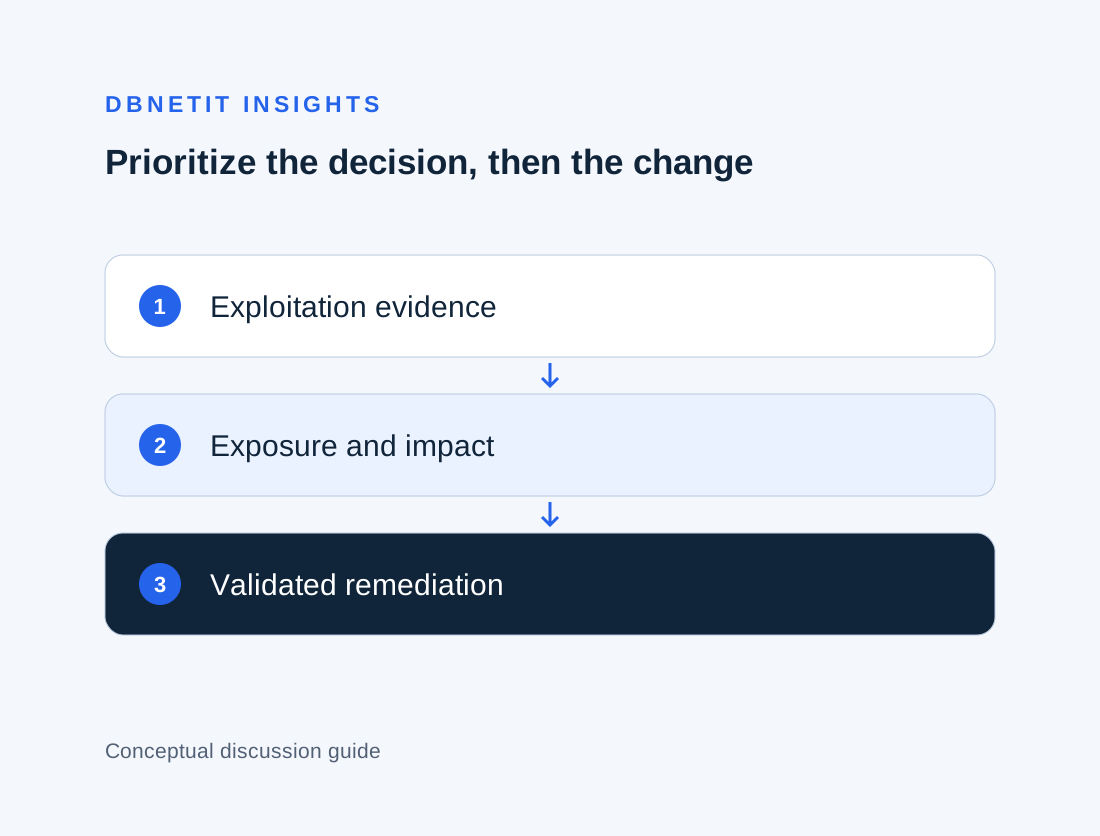
Volume is not the same as urgency
A large update release creates a triage problem before it creates an installation task. Which affected systems are present, which exposures matter and what can change safely? A headline vulnerability count does not answer those questions. NIST SP 800-40 Rev. 4 frames enterprise patch management as preventive maintenance that includes prioritization and verification. Start with a repeatable decision process that connects vendor information, asset ownership, operational constraints and the consequence of leaving a weakness unresolved.
Start with what is known to be exploited
Check the vendor advisory and whether the vulnerability appears in CISA’s Known Exploited Vulnerabilities (KEV) catalog. CISA describes the catalog as an input to vulnerability-management prioritization. Match the affected products and versions to your own inventory, then identify the relevant exposure and business owner. Absence from KEV is not evidence that a vulnerability is safe or will remain unexploited. Known exploitation deserves urgent review, while other vulnerabilities still need assessment using severity, reachability, available mitigations and the systems at risk.
Add exposure and business criticality
A flaw matters more on a system that is reachable from the internet, or that supports identity, remote access or a critical service. Use two further questions to refine the priority: how exposed is the system, and what would stop if it failed or were compromised? This depends on an accurate asset inventory. If you cannot say which systems run the affected software, finding out is the first task, and it is worth recording as a finding in its own right.
Plan the change, not just the patch
Applying an update is a change to a live environment. Identify dependencies, maintenance windows, approvals, validation steps and feasible recovery or rollback options before scheduling it. A patch that restarts a shared service can interrupt work that the patch ticket never mentions. The manufacturing change-planning article covers the same discipline for production-dependent systems. Validate the business activity the system supports, not only that the update installed.
Decide what happens when you cannot patch yet
Some systems cannot be updated immediately because of vendor support, testing needs or operating windows. Treat these as documented exceptions rather than silent delays. Record the reason, the interim mitigation, an accountable owner and a review date. Compensating controls such as restricting access or disabling a feature depend on the product, so confirm that the mitigation actually addresses the flaw. Give the exception a review or expiry date, and confirm who can accept the remaining risk.
Report decisions, not counts
Report the decisions that matter alongside useful measures of delivery. Identify relevant known-exploited vulnerabilities, affected business services, completed remediation and open exceptions. Include the owner, next action and review date for unresolved exposure. Patch counts can support operational reporting, but they do not by themselves describe the business risk. A concise summary should make the remaining decisions visible without claiming that installation totals prove every system is protected.
Prepare before the next release
Before the next update release, agree who triages vendor information, which environments are updated first and who approves emergency changes. Establish validation and escalation routes before a time-sensitive finding arrives. Set review targets according to your risk, contracts and operating constraints, rather than copying another organization’s deadline. DBNETIT’s Cybersecurity service can help prioritize findings and clarify ownership, and IT & Managed Services can support maintenance and change planning.